Across Texas and Oklahoma, landowners, ranchers, and wildlife managers face a growing challenge: how to control invasive vegetation and manage land effectively without overusing chemicals that harm ecosystems.
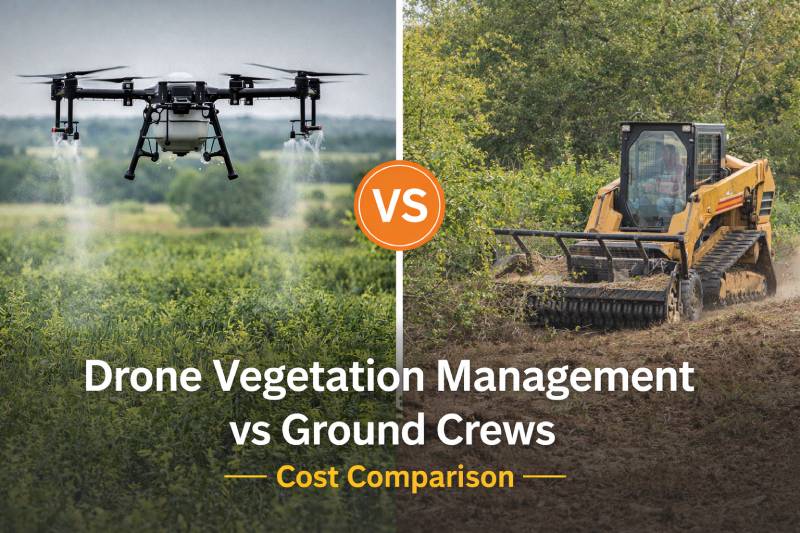
Traditional land management methods often rely on blanket herbicide applications, heavy machinery, and ground crews that can unintentionally disturb soil, wildlife habitats, and surrounding vegetation. However, precision drone technology is transforming the industry—making vegetation management more targeted, efficient, and environmentally responsible.
Here’s how modern drone-based land management is significantly reducing chemical use while improving long-term land health.
The Environmental Problem with Traditional Vegetation Management
Conventional vegetation control methods typically involve:
- Broadcast spraying over large areas
- Ground rigs that compress soil
- Manual application with inconsistent coverage
- Overspray and chemical drift
In large ranches across Texas or open properties in Oklahoma, this often leads to:
- Excess herbicide usage
- Damage to desirable plant species
- Runoff into waterways
- Disruption of wildlife habitats
The result? Higher costs and unintended ecological consequences.
Precision drone technology was developed to solve exactly these problems.
What Is Precision Drone Vegetation Management?
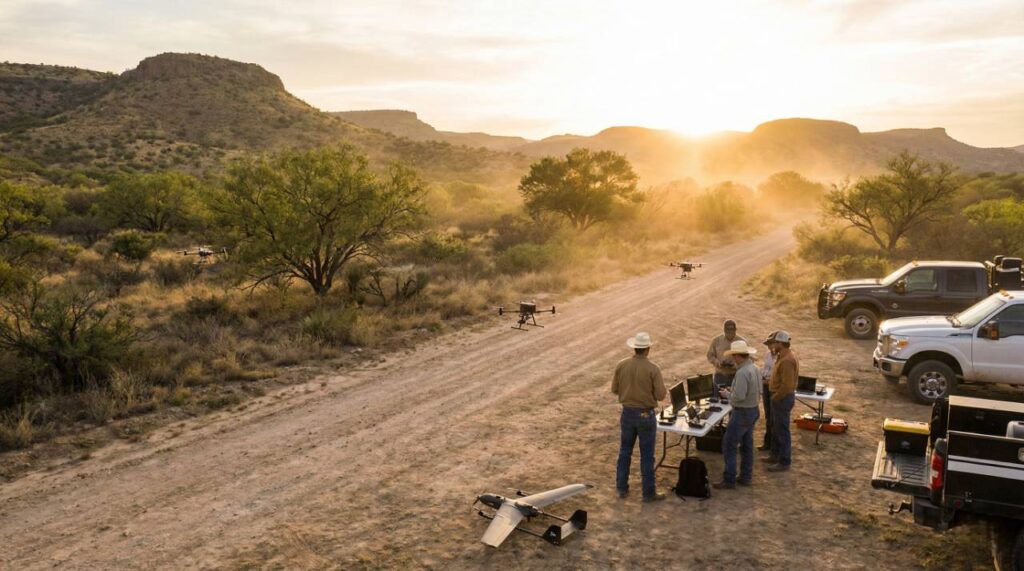
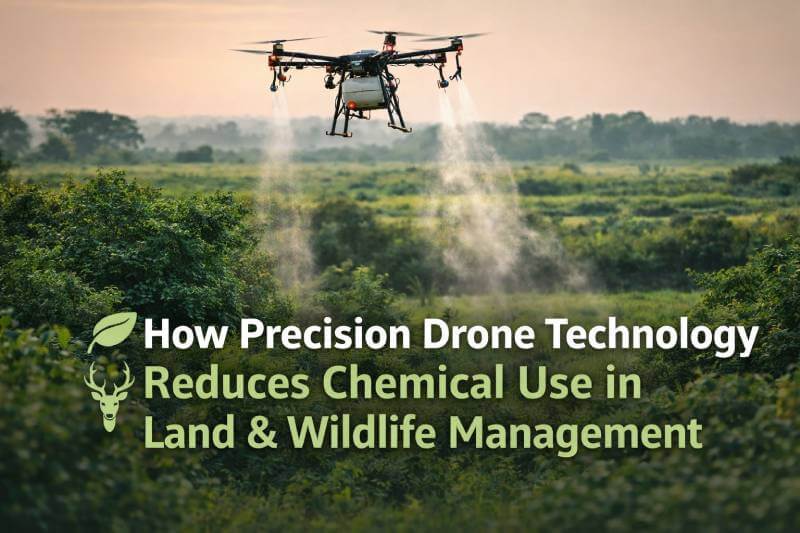
Precision drone vegetation management uses GPS-guided, data-driven drones to apply herbicides and treatments only where needed.
Unlike traditional methods, drones:
- Fly at controlled heights
- Use digital mapping software
- Apply variable-rate spraying
- Target invasive species precisely
For landowners in Texas and Oklahoma managing large acreage, this technology provides both environmental and operational advantages.
If you’d like to learn more about aerial vegetation control services, visit our Aerial Vegetation Management Services page.
How Drone Technology Reduces Chemical Usage
Targeted Application
Drone systems use advanced GPS mapping and flight planning software to identify exact treatment zones. Instead of spraying an entire field, drones treat only affected areas.
This dramatically reduces chemical volume.
In many cases, landowners see a reduction in herbicide usage of 20–40% compared to traditional methods.
Variable Rate Spraying
Drone technology allows operators to adjust spray volume mid-flight. Dense brush areas receive the necessary dosage, while lighter vegetation gets minimal application.
This eliminates unnecessary over-saturation.
Reduced Drift & Overspray
Because drones operate at lower altitudes with controlled droplet sizes, spray drift is significantly reduced compared to airplane or ground-based broadcast spraying.
Less drift means:
- Less chemical waste
- Protection of nearby water sources
- Protection of beneficial plant species
- Greater safety for livestock and wildlife
Data-Driven Land Mapping
Precision drone operations often begin with aerial mapping and land assessment.
By analyzing vegetation density and terrain conditions, operators create treatment plans based on real data—not guesswork.
This mapping process supports sustainable land management decisions long-term.
Learn more about our Aerial Mapping & Land Assessment Services.
Environmental Benefits for Texas & Oklahoma Landowners
Landowners across Texas and Oklahoma face unique environmental conditions:
- Drought cycles
- Invasive species spread
- Erosion-prone soils
- Large-scale acreage management
Drone-based land management supports sustainability by:
- Reducing chemical dependency
- Preserving soil integrity
- Preventing runoff into creeks and ponds
- Protecting native grasses
In ranch operations, maintaining healthy land directly impacts livestock productivity and long-term property value.
Wildlife Habitat Protection Through Precision Application
For wildlife managers and ranchers focused on habitat enhancement, chemical control must be strategic.
Blanket spraying can destroy food plots, native vegetation, and protective cover for deer, turkey, and other species.
Drone precision allows:
- Selective invasive removal
- Food plot preservation
- Controlled habitat improvement
- Protection of nesting areas
This is especially important for wildlife-focused properties in Oklahoma and Texas where conservation and hunting land management are priorities.
Explore our Wildlife Habitat Management Services to see how precision drone solutions support sustainable ecosystems.
Cost Efficiency + Sustainability: A Smart Investment
Reducing chemical use doesn’t just benefit the environment—it also reduces operational costs.
Lower herbicide volumes mean:
- Lower product expenses
- Reduced labor hours
- Faster treatment times
- Fewer repeat applications
For large-acreage landowners, this creates measurable financial savings while improving environmental responsibility.
Sustainability and profitability are no longer opposites—they now work together.
Why Ranchers in Texas & Oklahoma Are Switching to Drone Technology
Across the region, landowners are recognizing three key advantages:
- Efficiency on large acreage
- Reduced environmental impact
- Improved treatment accuracy
In areas where terrain is uneven, wooded, or difficult to access, drones eliminate the need for heavy machinery.
This reduces soil compaction and protects root systems.
Additionally, many Texas and Oklahoma ranchers are increasingly focused on regenerative land management practices—and drone technology aligns perfectly with that philosophy.
Is Drone Spraying Safe for the Environment?
When performed by licensed and trained professionals, drone spraying is considered one of the most environmentally controlled application methods available.
Key safety advantages include:
- Controlled droplet size
- Reduced human exposure
- Precise flight patterns
- Minimal soil disturbance
In fact, precision drone technology is often safer for surrounding ecosystems than traditional broadcast spraying.
Final Thoughts: Sustainable Land Management Starts from Above
Precision drone technology represents a shift toward smarter, more responsible land management.
By reducing chemical use, minimizing environmental disruption, and increasing efficiency, drone-based vegetation management is helping Texas and Oklahoma landowners protect their property for generations to come.
If you’re looking for eco-friendly, data-driven land management solutions, drone technology offers measurable results—both environmentally and financially.
To learn more or request a consultation, visit our Contact Page today.
Frequently Asked Questions
Yes. Precision drone application targets only affected areas, reducing overall herbicide volume compared to broadcast spraying.
When performed correctly, drone spraying reduces drift and overspray, making it safer for livestock and nearby vegetation.
Modern agricultural drones can treat large properties efficiently, depending on terrain and vegetation density.
Yes. Professional drone land management services are increasingly available across Texas and Oklahoma for ranches and wildlife properties.