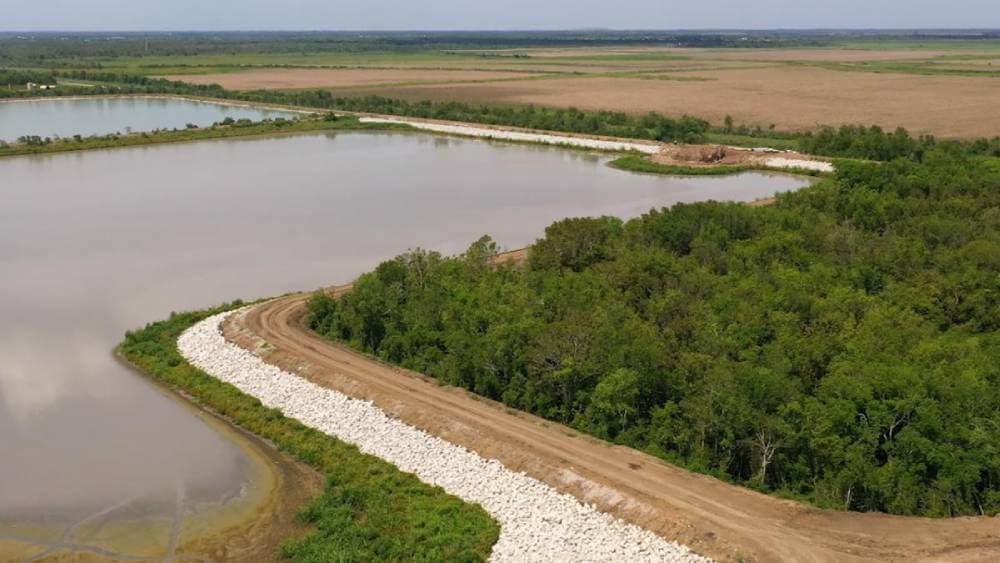
Dams and levees require consistent inspection and maintenance to help identify developing problems before they become more serious. Uncontrolled brush, woody vegetation, and overgrowth can obstruct visibility, restrict access to embankment surfaces, and make routine maintenance more difficult.
Dam and levee vegetation management is the planned control of unwanted vegetation to support visual inspections, maintenance access, and the long-term management of embankments. The goal is not to remove every plant. Instead, vegetation should be managed according to the structure’s design, maintenance requirements, site conditions, and applicable engineering guidance.
For dam owners, watershed authorities, municipalities, counties, and infrastructure managers in Texas and Oklahoma, professional vegetation control and aerial inspection tools can help support a more organized maintenance program.
Higher Ground Aerial Land and Wildlife provides aerial vegetation control for dams, levees, and watershed systems, along with drone-based dam and levee inspection services.
Why Vegetation Management Matters for Dams and Levees
Vegetation is a normal part of many landscapes surrounding water infrastructure. However, when woody growth or dense brush obstructs an embankment, it can create challenges for inspection teams and maintenance personnel.
The Texas Commission on Environmental Quality (TCEQ), in its Guidelines for Operation and Maintenance of Dams in Texas, identifies obscuring brush and trees as maintenance concerns. The guidance discusses how vegetation can obstruct visual inspections and how large tree roots may create potential seepage paths.
The U.S. Army Corps of Engineers also identifies vegetation as a factor that can affect levee visibility, maintenance access, and emergency flood-response operations.
These concerns make planned vegetation management an important part of a broader maintenance strategy.
1. Clearer Visual Inspections
Inspectors need to observe accessible embankment surfaces and look for changes that may require further investigation.
Excessive brush can conceal areas where inspectors need to check for:
- Erosion, exposed soil, or developing gullies.
- Cracks, depressions, or unusual settlement.
- Animal burrows and disturbed soil.
- Seepage, wet areas, or unexplained changes in surface conditions.
- Damage to grass cover or other erosion protection.
- Obstructions that prevent access to areas requiring closer inspection.
Vegetation control can improve visibility, but it does not replace a formal inspection by qualified personnel. The purpose is to help make the relevant areas more accessible and observable.
2. Better Access for Maintenance Teams
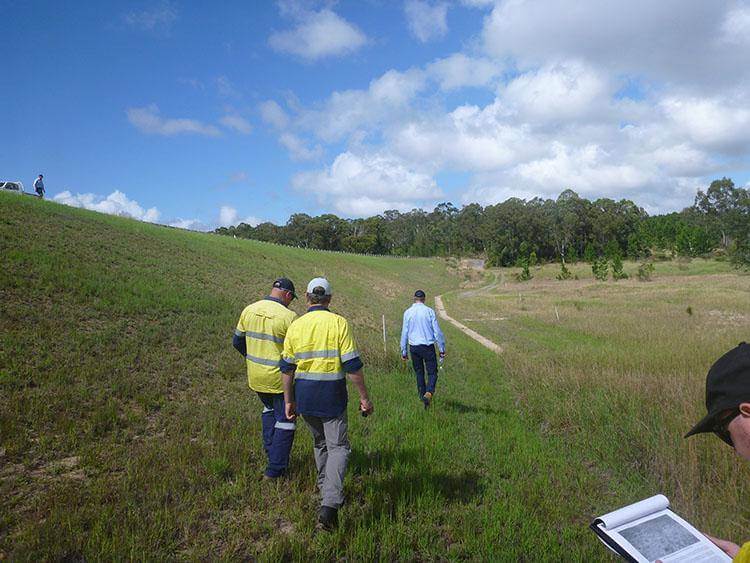
Routine maintenance may require personnel to reach the crest, slopes, drainage features, access routes, and other designated parts of an embankment.
Dense brush and unwanted woody growth can make these areas harder to reach. In some locations, steep slopes, soft ground, or limited access can also make conventional vegetation-control equipment difficult to use.
A planned vegetation-management program helps maintenance teams identify areas where access needs to be maintained and select suitable methods for controlling unwanted growth.
3. Support for Embankment Maintenance
Vegetation management should be coordinated with the wider maintenance plan for the structure.
Healthy grass cover can provide valuable surface erosion protection on many earthen embankments. By contrast, certain woody plants, brush, and unmanaged growth may interfere with inspection or create other maintenance concerns.
The appropriate vegetation policy depends on the dam or levee’s design, condition, owner requirements, and applicable engineering guidance. Removing established trees or their root systems without a suitable plan can disturb the embankment and potentially create additional problems.
For this reason, vegetation work should be coordinated with the dam owner or responsible engineer whenever the proposed treatment could affect structural features, roots, drainage, or erosion protection.
What Types of Vegetation Should Dam and Levee Managers Monitor?
Not every plant presents the same level of concern. The management approach should account for the species, location, growth pattern, and purpose of the vegetation.
Woody Plants and Trees
Trees and woody vegetation can be a concern when they obstruct inspection, restrict access, or conflict with the structure’s approved vegetation-management plan.
However, decisions about established trees require particular care. Root systems may extend into the embankment, and removal can leave voids or disturb soil. Some structures also have specific requirements for how and when woody vegetation may be removed.
Managers should consult the applicable maintenance plan and qualified engineering personnel before removing established trees or disturbing their root systems.
Dense Brush and Invasive Vegetation
Dense brush can obstruct views of the embankment surface and interfere with routine maintenance.
Unwanted vegetation may spread along slopes, drainage areas, access routes, or adjoining land. If the growth prevents inspections or conflicts with the site’s maintenance requirements, targeted control may be appropriate.
Treatment should be based on the vegetation present and the desired outcome, rather than applying the same approach to every part of the property.
Tall Grass and Ground Cover
Tall grass may need to be managed to maintain visibility and access. However, grass and other approved ground cover can also help protect an embankment from surface erosion.
The goal is to maintain suitable, inspectable ground cover—not to leave bare soil across the embankment.
Maintenance teams should follow the structure’s specific requirements for mowing height, vegetation types, erosion protection, and access.
Aquatic and Water-Adjacent Vegetation
Vegetation near reservoirs, drainage channels, spillways, and water-control features may require separate consideration.
Some aquatic or water-adjacent growth can interfere with access or maintenance. Other vegetation may have ecological value or serve a function within the site’s approved management plan.
Any treatment near water must account for the product label, permitted application sites, water-related restrictions, and applicable state and federal requirements.
Common Warning Signs That Vegetation Needs Attention
Regular observation can help managers identify when vegetation is interfering with inspection or maintenance.
Look for the following conditions during routine site visits:
Vegetation obscures the embankment surface. Brush or woody growth makes it difficult to observe areas that need inspection.
Access routes are becoming obstructed. Overgrowth restricts movement along designated inspection or maintenance routes.
Trees or woody plants are growing in areas covered by maintenance restrictions. These locations may require assessment under the structure’s approved vegetation policy.
Erosion protection is deteriorating. Bare patches, exposed soil, rills, or gullies may indicate that surface protection needs attention.
Vegetation is concealing other potential problems. Dense growth may make it difficult to observe animal burrows, wet areas, settlement, or other changes that warrant further evaluation.
Routine maintenance is becoming more difficult. Crews need additional work to reach or observe designated areas because of uncontrolled vegetation.
These observations do not establish that a dam or levee has a structural defect. They identify conditions that may require closer inspection by the responsible maintenance team or a qualified engineer.
How Drone-Based Vegetation Control Can Help
Traditional vegetation-control methods remain useful for many infrastructure projects. However, ground equipment can be difficult to operate in steep, wet, uneven, or restricted-access areas.
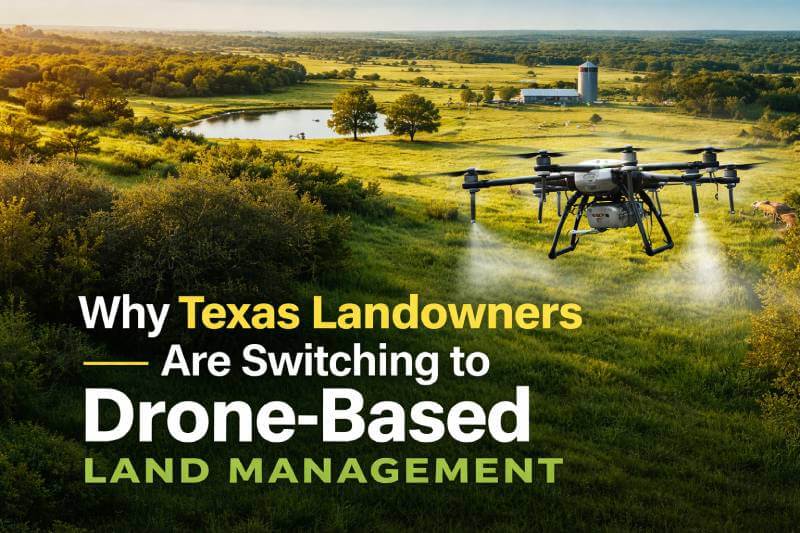
Professional drone-based vegetation treatment provides another option when aerial application is suitable for the site and target vegetation.
Access to Difficult Terrain
Drones can reach selected treatment areas without driving heavy equipment directly across the entire site.
This may be useful on certain slopes, along designated embankment sections, or in locations where ground access is limited. Reduced equipment traffic can also help avoid unnecessary rutting or soil disturbance.
Actual suitability depends on terrain, obstacles, flight conditions, site access, and the proposed application.
Targeted Vegetation Treatment
Aerial treatment can be planned around identified vegetation-management zones rather than treating every area in the same way.
For example, a project may identify specific brush-covered sections that interfere with maintenance while retaining appropriate grass cover elsewhere.
Targeted treatment still requires correct plant identification, appropriate product selection, compliance with label instructions, and attention to weather and drift conditions.
Less Ground Equipment Movement
Because a drone operates above the ground, it can reduce the need to move certain types of equipment through a treatment area.
This can be beneficial where ground disturbance is a concern. Nevertheless, aerial application is not a substitute for mechanical work, excavation, root removal, drainage repairs, or other tasks that require direct physical intervention.
A Complement to Existing Maintenance Programs
Drone treatment is most useful when integrated into an established site-management process.
The owner or maintenance team can identify priority areas, confirm the appropriate vegetation-control approach, schedule treatment, and inspect the results.
Higher Ground Aerial offers watershed and dam vegetation control for dams, levees, and watershed systems in Texas and Oklahoma.
How Drone Inspections Support Vegetation Management
Vegetation control and structural inspection serve related but different purposes.
Vegetation treatment manages unwanted growth. Drone inspection and mapping can help teams document visible site conditions and identify areas that may warrant closer attention.
Higher Ground Aerial also offers drone and levee/dam inspection services using aerial imaging.
Depending on the equipment, site conditions, and inspection objectives, drone imagery may help teams:
- Document visible vegetation growth across designated areas.
- Compare imagery collected at different times.
- Identify sections where brush may be obstructing access or visibility.
- Record visible surface changes that require ground-level assessment.
- Organize mapping and maintenance records for planning purposes.
Aerial imagery has limitations. It cannot independently establish the internal condition of an embankment, confirm the absence of seepage or structural defects, or replace required field inspections and engineering assessments.
Where imagery reveals a possible concern, the responsible team should arrange appropriate follow-up inspection.
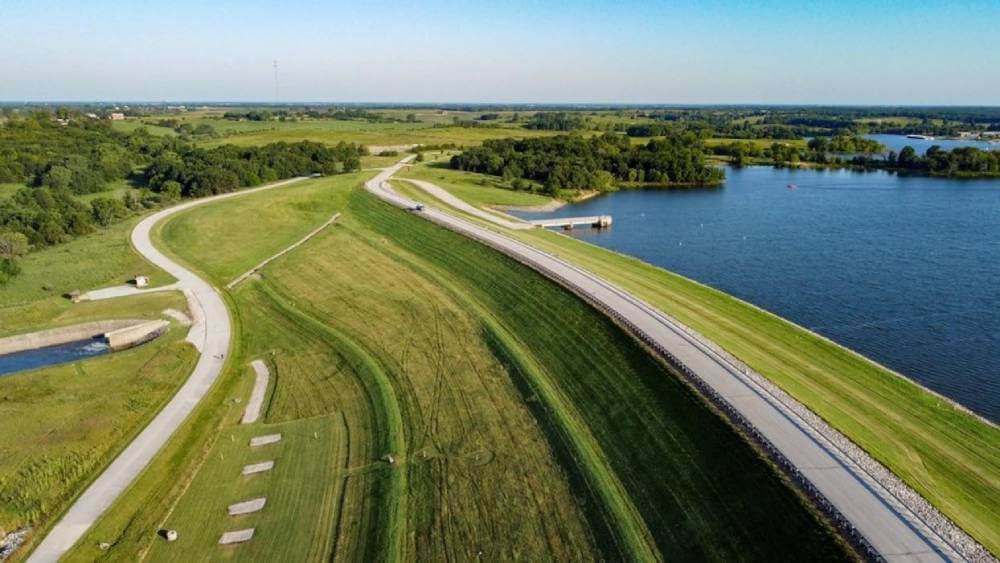
A Practical Dam and Levee Vegetation Management Process
A repeatable process helps managers coordinate vegetation work with inspection and maintenance requirements.
Step 1: Review the Structure’s Requirements
Start with the dam or levee’s operation and maintenance documentation, vegetation policy, previous inspection findings, and any applicable owner or agency requirements.
For Texas dams, TCEQ’s Guidelines for Operation and Maintenance of Dams in Texas provide useful background on inspection and maintenance concerns.
Levees and other flood-control structures may be subject to different requirements. Managers should use the guidance applicable to their particular structure.
Step 2: Identify Priority Areas
Document locations where vegetation is affecting visibility, access, or planned maintenance.
A site review may include the embankment crest, upstream and downstream slopes, drainage features, access routes, and other designated areas.
Do not assume every section requires the same level of vegetation control.
Step 3: Select an Appropriate Control Method
Compare available methods based on the plant species, density, terrain, site access, and maintenance objectives.
Depending on the circumstances, options may include mowing, selective mechanical work, individual-plant treatment, or professional aerial application.
The chosen method should comply with the structure’s management plan and any relevant product-label, licensing, and environmental requirements.
Step 4: Coordinate Work With Inspection and Maintenance Teams
Before treatment begins, clarify the areas to be treated, areas to remain undisturbed, access requirements, and any locations requiring engineering oversight.
This is particularly important where trees, roots, drainage structures, erosion protection, or suspected defects may be involved.
Step 5: Document the Work
Record the treatment date, areas covered, methods used, and any observations made during the project.
Before-and-after photographs or aerial maps may support maintenance records when collected consistently and interpreted appropriately.
Step 6: Revisit and Monitor
Vegetation can return after treatment, and new growth may appear in previously managed areas.
Follow-up reviews help determine whether additional control is needed and whether the desired access and visibility have been maintained.
Vegetation treatment should remain one part of the site’s broader inspection, repair, and maintenance program.
Why Texas and Oklahoma Infrastructure Managers Should Plan Ahead
Texas and Oklahoma include dams, reservoirs, drainage systems, levees, and watershed infrastructure that may experience a wide range of terrain and weather conditions.
Seasonal growth can change how easily maintenance teams access and observe certain areas. Heavy rainfall, flooding, drought, and other conditions can also affect when vegetation work can be performed safely and appropriately.
Rather than waiting until growth becomes difficult to manage, infrastructure managers can plan periodic reviews around the site’s inspection schedule and maintenance requirements.
A planned program can help teams prioritize work, document recurring vegetation concerns, and coordinate vegetation control with other maintenance activities.
For public agencies and infrastructure owners managing multiple sites, aerial mapping and drone-based treatment may also help organize work across designated areas, particularly where conventional equipment access is difficult.
Choosing a Dam and Levee Vegetation Management Provider
Infrastructure vegetation work requires more than equipment capable of reaching the site. The provider should understand the treatment objectives, site limitations, and importance of coordinating work with the responsible owner or maintenance team.
Before starting a project, ask potential providers:
- Do you have experience with vegetation control around dams, levees, and watershed infrastructure?
- Are your operators and pesticide applicators appropriately authorized for the proposed work?
- Can the treatment plan identify areas to be treated and areas that must remain undisturbed?
- How will the project account for water, sensitive areas, weather, and application restrictions?
- Can you provide documentation of the treatment areas and work performed?
- How will the work coordinate with existing inspection and maintenance requirements?
A suitable provider should be willing to discuss the site’s objectives and limitations before recommending a treatment method.
Dam and Levee Vegetation Management With Higher Ground Aerial
Higher Ground Aerial Land and Wildlife provides aerial vegetation control and drone inspection services for dams, levees, and watershed systems across Texas and Oklahoma.
The team uses aerial technology to help address unwanted vegetation in areas where access and ground disturbance are important considerations. Services include watershed/dam vegetation control, drone and levee/dam inspection, aerial mapping, and broader vegetation-management solutions.
Every site has its own requirements. The appropriate treatment depends on the vegetation present, site access, the owner’s maintenance plan, and applicable engineering and regulatory guidance.
If unwanted brush is obstructing access or making it more difficult to observe designated embankment areas, a site-specific assessment can help determine whether aerial vegetation treatment is appropriate.
Planning vegetation work for a dam, levee, or watershed system?
Contact Higher Ground Aerial to discuss your site’s vegetation challenges, access limitations, and maintenance objectives.
- Website: Higher Ground Aerial
- Services: Watershed/Dam Vegetation Control and Drone Inspections
- Request a consultation: Contact Higher Ground Aerial
- Phone: (214) 744-3647
Frequently Asked Questions
Why is vegetation management important for dams and levees?
Vegetation management helps maintain visibility of designated embankment surfaces, supports access for inspection and maintenance, and addresses unwanted growth that may conflict with the structure’s maintenance requirements. It is one part of an overall dam or levee maintenance program.
Should all trees and vegetation be removed from a dam or levee?
No. Vegetation requirements depend on the structure, its design, and its maintenance plan. Suitable grass cover can help protect against surface erosion, while certain woody vegetation may create inspection or maintenance concerns. Established trees should not be removed without considering root systems, soil disturbance, and applicable engineering guidance.
Can drones be used for dam and levee vegetation control?
Professional spray drones may be suitable for selected vegetation-treatment projects, particularly where terrain or ground access makes conventional equipment difficult to use. Suitability depends on the target vegetation, application requirements, weather, site conditions, and applicable regulations.
Can drone imagery replace a dam or levee inspection?
No. Drone imagery can support documentation and help identify visible areas that may require further attention, but it does not replace required field inspections, engineering evaluations, or other assessments specified for the structure.
How often should vegetation be controlled around a dam or levee?
There is no single schedule suitable for every structure. The frequency depends on vegetation growth, site conditions, owner requirements, inspection findings, and applicable maintenance guidance. Follow the structure’s approved maintenance program and adjust work as conditions change.
What vegetation problems should maintenance teams report?
Teams should report conditions such as obscured inspection areas, new erosion, exposed soil, animal burrows, unusual wet areas, cracks, settlement, or other unexpected changes. Potential structural concerns should be referred promptly to the responsible dam or levee authority and qualified engineering personnel.
Can aerial vegetation management help in difficult-to-access areas?
It can be a useful option when vegetation is located on steep slopes, uneven ground, or other areas where ground equipment access is limited. A site assessment is necessary to determine whether aerial treatment is appropriate and compliant.
What information is needed for a dam or levee vegetation-control quote?
Useful details include the site’s location, approximate treatment area, vegetation types and density, access limitations, proximity to water, maintenance objectives, and any site-specific restrictions. Existing maps or photographs can help with the initial discussion.
Need a vegetation-management plan for your infrastructure site? Contact Higher Ground Aerial to discuss the project and evaluate suitable aerial treatment options.