
If you own or manage a large ranch, wildlife property, watershed, levee, pond, or other rural property in Texas, you may have heard about drone-based vegetation management.
But before hiring a drone operator, an important question needs to be answered:
Is drone spraying safe?
The short answer is that drone spraying can be a safe and highly precise method of vegetation management when it is performed by properly licensed operators, using approved products and following applicable state and federal requirements.
Safety, however, is not simply about the drone itself. It depends on the operator, application equipment, weather conditions, treatment area, product label, flight planning, and regulatory compliance.
For Texas landowners, understanding these factors can help you make an informed decision about whether aerial drone vegetation management is appropriate for your property.
How Drone Spraying Works
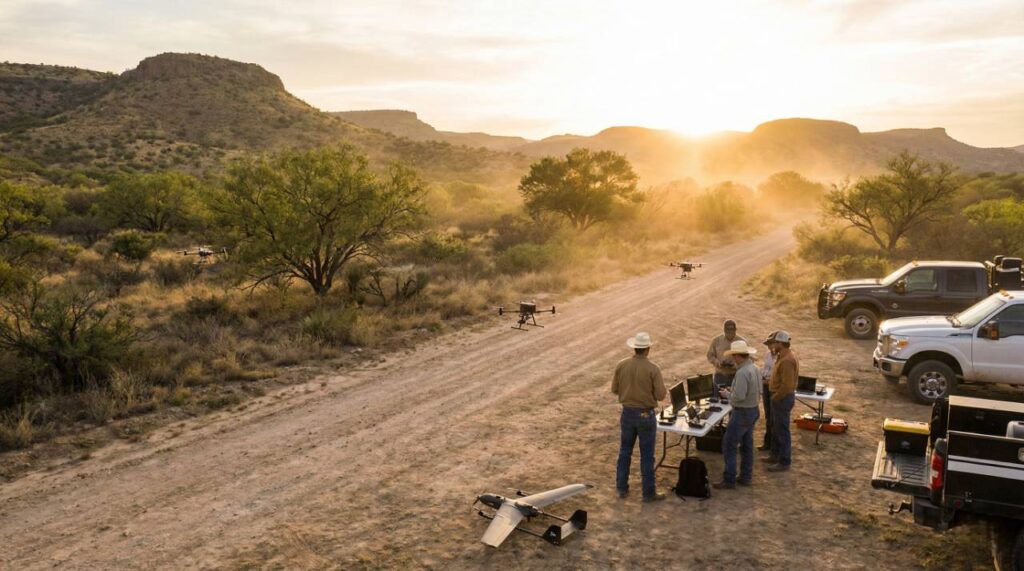
Spray drones are unmanned aircraft equipped with specialized tanks, pumps, nozzles, positioning systems, and flight-control technology.
Instead of driving heavy equipment across the property, an operator plans a flight path and directs the drone over the designated treatment area.
Higher Ground Aerial currently uses advanced spray-drone technology equipped with GNSS/RTK positioning, terrain-following radar, adjustable droplet sizes, and automated flight capabilities.
This technology allows operators to manage vegetation in areas that may be steep, wet, remote, or difficult to access with traditional machinery.
For landowners, one of the biggest advantages is that the drone does not need to physically travel across the ground.
That can eliminate problems associated with heavy equipment such as:
- Soil compaction
- Tire ruts
- Damage to sensitive terrain
- Difficult access
- Equipment-related safety risks
Is Drone Spraying Actually Safe?
Drone spraying should not be described as risk-free.
Any pesticide or herbicide application requires careful planning and compliance with applicable requirements.
However, properly managed drone applications can provide significant safety and environmental advantages in the right circumstances.
The Texas Department of Agriculture requires applicable pesticide applicators using drones to meet licensing requirements, and drone pesticide applications must also comply with applicable FAA requirements. Product labels and application directions must be followed as well.
For Higher Ground Aerial, safety is built into the process through licensed pilots, compliant spray programs, site assessment, and precision application.

Five Factors That Make Drone Spraying Safer
1. Licensed and Qualified Operators
The person operating a spray drone is one of the most important safety factors.
In Texas, pesticide applications by drone can require a pesticide applicator license with the appropriate aerial category. The Texas Department of Agriculture identifies Category 9 as the aerial application category and requires an additional category appropriate to the type of application.
Depending on the pesticide and application, additional requirements may apply.
This is why landowners should always ask a drone spraying company about:
- Pesticide licensing
- Aerial application qualifications
- FAA authorization
- Insurance
- Experience with the type of property being treated
Higher Ground Aerial states that it holds FAA authorization as well as pesticide applicator licenses in Texas and Oklahoma.
2. Precision GPS-Guided Applications
Modern spray drones can use high-accuracy positioning systems to follow predetermined flight paths.
This allows the operator to define the treatment area before the application begins.
Higher Ground Aerial’s equipment includes GNSS/RTK positioning and terrain-following radar to support accurate applications.
Precision matters because the objective isn’t simply to spray more land.
The objective is to treat the right vegetation in the right location with the appropriate application.
3. Controlled Spray Patterns
Spray drones can be configured with specialized nozzles and adjustable droplet sizes.
This gives trained operators greater control over how material is distributed.
Higher Ground Aerial’s listed equipment includes centrifugal nozzles capable of adjustable droplet sizes, along with a stated 30-foot swath capability.
Proper configuration helps operators match the application to the project requirements and product label.
4. Weather and Wind Conditions
Weather is a critical consideration in any aerial pesticide application.
Wind, temperature, humidity, and other conditions can influence spray behavior and potential drift.
Texas has specific restrictions for regulated herbicides. For example, TDA states that regulated herbicides must not be sprayed when wind velocity exceeds 10 mph, unless the product label is more restrictive. Additional county-specific restrictions may also apply.
A responsible operator should therefore evaluate conditions before and during an application rather than treating weather as an afterthought.
If conditions aren’t appropriate, the application should wait.
5. Following Product Labels and Regulations
One of the most important safety principles is simple:
The product label matters.
Texas requires drone pesticide applications to comply with applicable product-label directions, including application rates, concentrations, safety requirements, and restrictions on aerial application.
Some herbicides also have additional Texas restrictions.
Regulated herbicides can have specific requirements involving:
- Spray permits
- Wind conditions
- Application methods
- Timing
- Susceptible crops
- Geographic restrictions
These requirements can vary by product and county.
This is another reason why landowners should work with qualified professionals rather than attempting pesticide applications without the necessary licensing and expertise.
Is Drone Spraying Safe for Wildlife?
This is particularly important for Texas ranches and wildlife properties.
The goal of vegetation management should not be to damage the ecosystem being managed.
Drone applications can reduce physical disturbance because the aircraft doesn’t need to drive through the treatment area.
That can be particularly useful around:
- Wetlands
- Riparian areas
- Wildlife habitat
- Creek corridors
- Steep slopes
- Food plots
- Sensitive terrain
Higher Ground Aerial specifically positions its services around minimizing environmental disturbance while managing invasive and unwanted vegetation.
However, safe wildlife management requires more than simply using a drone.
Treatment timing, target vegetation, product selection, weather, application rate, and surrounding habitat all matter.
The right approach is to identify the management objective first and then determine the appropriate treatment.
Is Drone Spraying Safe Near Waterways?
Waterways require particular care.
Ponds, lakes, rivers, drainage channels, reservoirs, watersheds, and other aquatic environments can be sensitive to unintended pesticide exposure.
Higher Ground Aerial provides specialized aquatic aerial spraying for invasive vegetation in ponds, lakes, rivers, canals, and reservoirs.
Precision aerial application can be useful in these environments because drones can access areas that may be difficult or unsafe for ground equipment.
But proximity to water does not automatically mean an application is permitted.
The product label and applicable federal, state, and local requirements must be evaluated for each project.
How Texas Regulates Drone Herbicide Applications
Texas has specific requirements for pesticide applications made by drones.
According to the Texas Department of Agriculture, applicators making certain pesticide or regulated herbicide applications by drone must hold the required pesticide applicator credentials and comply with additional FAA requirements.
For agricultural applicators, the aerial category is part of the licensing framework for pesticide applications made by aircraft.
Texas also maintains additional restrictions for regulated herbicides, including restrictions that can vary by county.
For landowners, the takeaway is straightforward:
Don’t choose a drone operator based solely on price. Choose an operator that understands licensing, application requirements, flight safety, and pesticide compliance.

Drone Spraying vs. Traditional Ground Equipment
Drone applications aren’t automatically the best solution for every property.
Traditional equipment can still be appropriate for certain types of land clearing, mechanical removal, or projects requiring physical removal of vegetation.
However, ground equipment can create challenges when working in:
- Steep terrain
- Wet ground
- Sensitive habitat
- Narrow corridors
- Dams and levees
- Difficult-to-access areas
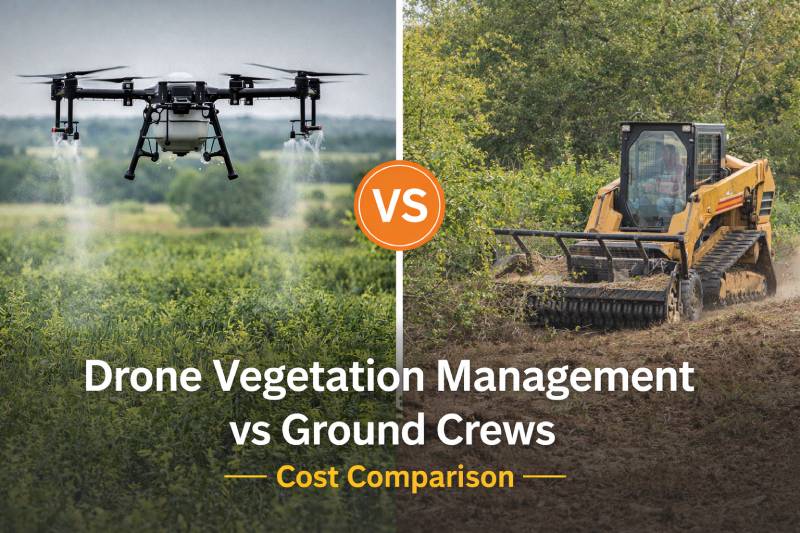
Drones offer an important alternative because treatment can occur without putting heavy machinery directly onto the ground.
For many vegetation management projects, this can mean less physical disturbance and lower operational risk.
When Drone Spraying Makes Sense for Your Property
Drone vegetation management may be worth considering if you have:
Large Acreage
Large properties can be difficult and expensive to manage using conventional ground equipment.
Difficult Terrain
Steep slopes, wetlands, waterways, and remote areas can make traditional equipment impractical.
Sensitive Land
Properties where minimizing soil disturbance is important can benefit from an aerial approach.
Invasive Vegetation
Targeted aerial applications can help manage invasive and unwanted vegetation where treatment is appropriate.
Watershed or Infrastructure Concerns
Dams, levees, drainage systems, and other infrastructure may require vegetation control while minimizing physical access and disturbance.
Higher Ground Aerial provides aerial vegetation management for infrastructure, watersheds, facilities, and difficult terrain throughout its Texas and Oklahoma service areas.
Why Choose Higher Ground Aerial?
Higher Ground Aerial specializes in precision aerial vegetation control and wildlife habitat improvement for large landowners and public agencies.
The company’s current services include:
- Watershed and dam vegetation control
- Aquatic aerial spraying
- Wildlife habitat improvement
- Aerial vegetation management
- Mesquite control
- Cactus control
- Forestry site preparation and brush management
- Drone and levee/dam inspection
The company states that it operates with FAA authorization and pesticide applicator licensing in Texas and Oklahoma.
Its approach combines aerial mapping, site assessment, precision application, and follow-up reporting.
The goal isn’t simply to spray an area.
It’s to manage vegetation with precision while minimizing unnecessary disturbance to the land.
Final Thoughts: Is Drone Spraying Safe?
So, is drone spraying safe?
When performed by qualified operators using appropriate equipment, approved products, proper application methods, and required regulatory procedures, drone spraying can be a safe and effective tool for vegetation management.
The technology offers several advantages over heavy ground equipment, particularly when properties are steep, wet, remote, environmentally sensitive, or difficult to access.
But responsible application is the key.
A drone alone doesn’t make an application safe.
The combination of trained professionals, accurate planning, appropriate weather conditions, precision technology, and regulatory compliance is what makes the difference.
If you’re considering vegetation management for a Texas ranch, wildlife property, watershed, dam, levee, or other large property, a professional site assessment can help determine whether aerial treatment is appropriate.
Ready to discuss your property? Contact Higher Ground Aerial for a consultation.
FAQ
Is drone spraying safe for people?
Drone pesticide applications must follow applicable product-label requirements and state and federal regulations. Properly planned operations are designed to keep people outside the treatment area and minimize unintended exposure.
Are spray drones safe for wildlife?
Drone applications can reduce physical disturbance compared with heavy ground equipment, but wildlife safety also depends on the product, timing, application method, weather, and site conditions.
Is drone spraying legal in Texas?
Drone pesticide applications are permitted when the operator meets applicable Texas pesticide licensing requirements, FAA requirements, product-label requirements, and any additional restrictions that apply to the specific application.
Can drones spray near ponds and waterways?
Some drone applications can be performed around aquatic environments, but the specific pesticide label and applicable regulations must be followed. Texas also has additional restrictions for certain regulated herbicides and locations.
Are drones safer than ground spraying?
The answer depends on the project. Drones can reduce soil disturbance and provide access to difficult terrain, but both aerial and ground applications must be properly planned and conducted according to applicable requirements.