How Drone-Based Vegetation Management Saves Time, Money, and Land Health
Vegetation management is a critical part of maintaining healthy land, productive acreage, and sustainable wildlife habitats. For decades, landowners have relied on ground crews, heavy machinery, and manual spraying to control invasive plants and overgrowth. While effective in the past, these traditional methods are increasingly expensive, time-consuming, and disruptive to the environment.
Drone-based vegetation management is transforming how landowners approach vegetation control. By combining precision technology with aerial efficiency, drones offer a smarter, safer, and more sustainable solution for managing land at scale.
What Is Drone-Based Vegetation Management?
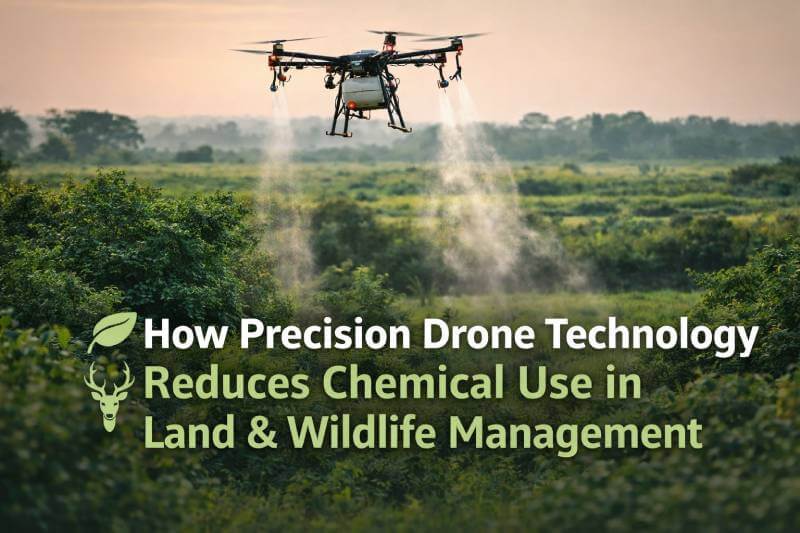
Drone-based vegetation management uses unmanned aerial systems (UAS) to apply herbicides, monitor vegetation growth, and assess land conditions from above. These drones are equipped with GPS-guided navigation, precision spray systems, and high-resolution cameras.
Instead of blanketing an entire area with chemicals or relying on heavy ground equipment, drones deliver targeted treatment only where it’s needed. This method allows for greater accuracy, reduced environmental impact, and significantly improved efficiency.
Why Traditional Vegetation Management Is No Longer Enough
Labor-Intensive and Time-Consuming
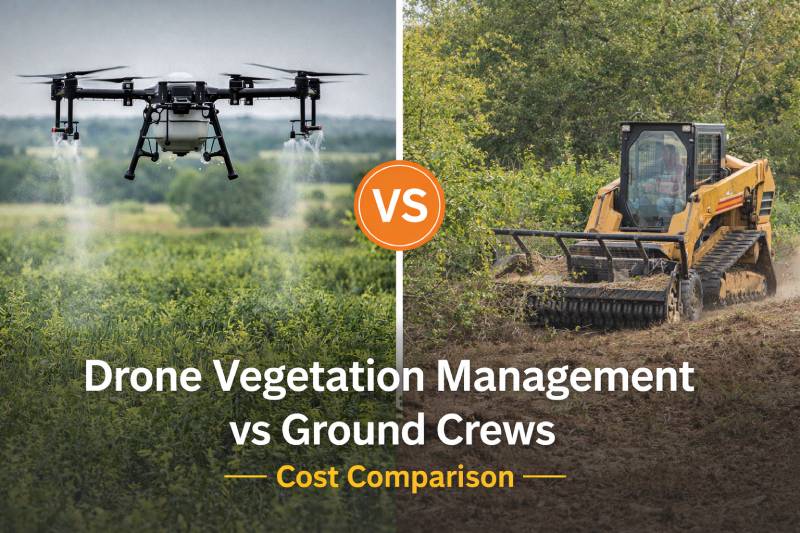
Manual spraying and mechanical clearing require large crews and extended timelines. Managing hundreds or thousands of acres using ground-based methods can take weeks—or even months—to complete.
Environmental Impact of Heavy Equipment
Tractors, skid steers, and other machinery compact soil, damage root systems, and increase erosion. These disturbances can negatively affect long-term land health and wildlife habitats.
Rising Costs and Limited Precision
Fuel costs, labor expenses, and equipment maintenance continue to rise. Traditional spraying methods often result in over-application, wasting chemicals and increasing costs without improving results.
How Drone-Based Vegetation Management Saves Time
Faster Coverage of Large Acreage
Drones can treat large areas in a fraction of the time required by ground crews. What once took days can now be completed in hours, allowing landowners to address vegetation issues quickly and efficiently.
Access to Hard-to-Reach Areas
Steep terrain, wetlands, dense brush, and remote locations are no longer obstacles. Drones easily access areas that are unsafe or impractical for ground equipment, ensuring full coverage without delays.
How Drone Vegetation Management Reduces Costs
Lower Labor and Equipment Expenses
Drone operations require fewer personnel and eliminate the need for heavy machinery. This drastically reduces labor costs, fuel consumption, and equipment wear and tear.
Reduced Chemical Waste
Precision spraying ensures herbicides are applied only where necessary. This targeted approach minimizes chemical use, saving money while improving treatment effectiveness.
How Drone-Based Vegetation Management Improves Land Health
Precision Application Protects Desirable Plants
Traditional methods often damage surrounding vegetation. Drone-based spraying targets invasive species while preserving beneficial grasses, trees, and native plants.
Reduced Soil Compaction and Erosion
With no heavy machinery on the ground, soil structure remains intact. This supports healthier root systems, better water absorption, and reduced erosion.
Long-Term Ecosystem Benefits
Healthier vegetation management promotes biodiversity, improves water quality, and supports wildlife habitats. Over time, land treated with precision aerial methods shows stronger resilience and sustainability.
Drone-Based Vegetation Management for Wildlife and Habitat Restoration
For wildlife-focused properties, vegetation management is about more than appearance—it’s about balance. Drones allow land managers to enhance food plots, improve cover areas, and restore natural habitats without disturbing wildlife.
By selectively managing vegetation, drones help create environments where wildlife can thrive while maintaining ecological integrity.
Who Benefits Most from Drone Vegetation Management?
Ranch Owners and Large Landowners
Managing extensive acreage efficiently is essential for profitability. Drone-based vegetation management provides fast, cost-effective solutions tailored to large properties.
Wildlife Management Properties
Precision control supports habitat health without disrupting animal behavior or damaging sensitive areas.
Commercial and Municipal Land
Roadways, utility corridors, and public lands benefit from efficient vegetation control with minimal disruption to surrounding infrastructure.
Why Professional Drone Vegetation Management Matters
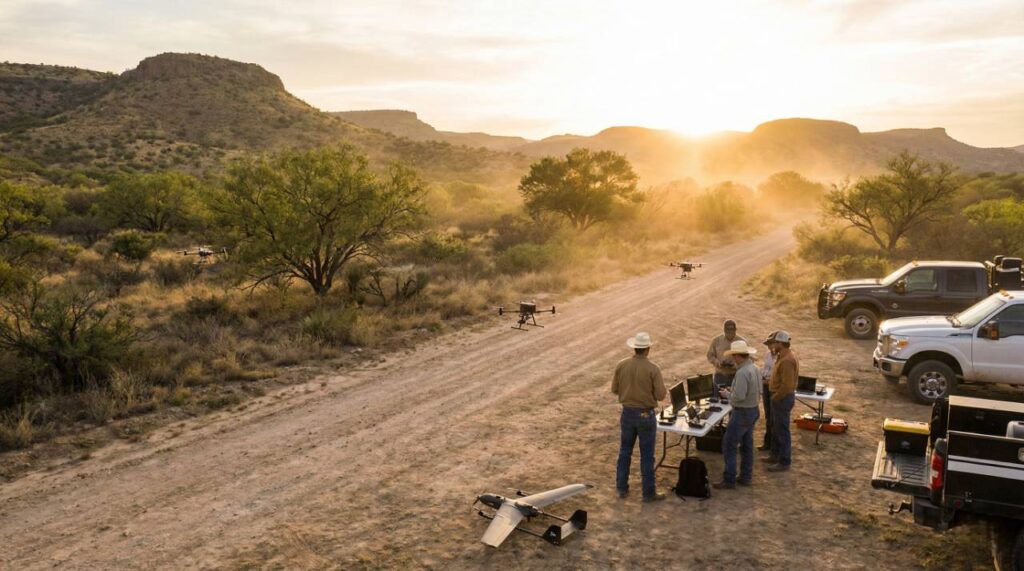
While drone technology is powerful, professional expertise ensures compliance, safety, and optimal results. Experienced operators understand application rates, vegetation types, and environmental factors that influence treatment success.
Partnering with a professional aerial land management provider ensures your land receives effective treatment while protecting long-term value.
The Future of Land Management Is in the Air
Drone-based vegetation management represents a smarter approach to land care—one that saves time, reduces costs, and protects land health. As technology continues to evolve, aerial solutions will become the standard for efficient and sustainable land management.
For landowners looking to improve results while minimizing impact, drone-based vegetation management is no longer the future—it’s the present.