How Drones Improve Wildlife Habitat Management Without Damaging the Ecosystem
Wildlife habitat management plays a critical role in maintaining healthy ecosystems, supporting biodiversity, and ensuring sustainable land use. However, traditional land management methods often come with unintended environmental consequences—soil compaction, habitat disruption, chemical overuse, and damage to sensitive wildlife areas.
In recent years, drone technology has emerged as a smarter, safer, and more environmentally responsible solution. By combining precision, data accuracy, and reduced physical impact, drones are transforming how wildlife habitats are managed—without harming the ecosystem they are meant to protect.
In Texas, wildlife habitat management presents unique challenges—from invasive vegetation and vast acreage to sensitive ecosystems and diverse wildlife species. Drone-based land management is quickly becoming the preferred solution for Texas landowners, ranchers, and conservation professionals seeking environmentally responsible results without disturbing the land.
The Challenge of Traditional Wildlife Habitat Management
Conventional habitat management typically relies on heavy machinery, ground crews, or broad-scale chemical applications. While effective in some cases, these methods often create new problems.
Environmental Issues with Traditional Methods
- Soil compaction that disrupts root systems
- Destruction of nesting and feeding areas
- Over-application of herbicides
- Chemical drift into waterways
- Limited access to sensitive or remote terrain
For wildlife-focused landowners and conservation professionals, these risks can outweigh the benefits.
What Is Drone-Based Wildlife Habitat Management?
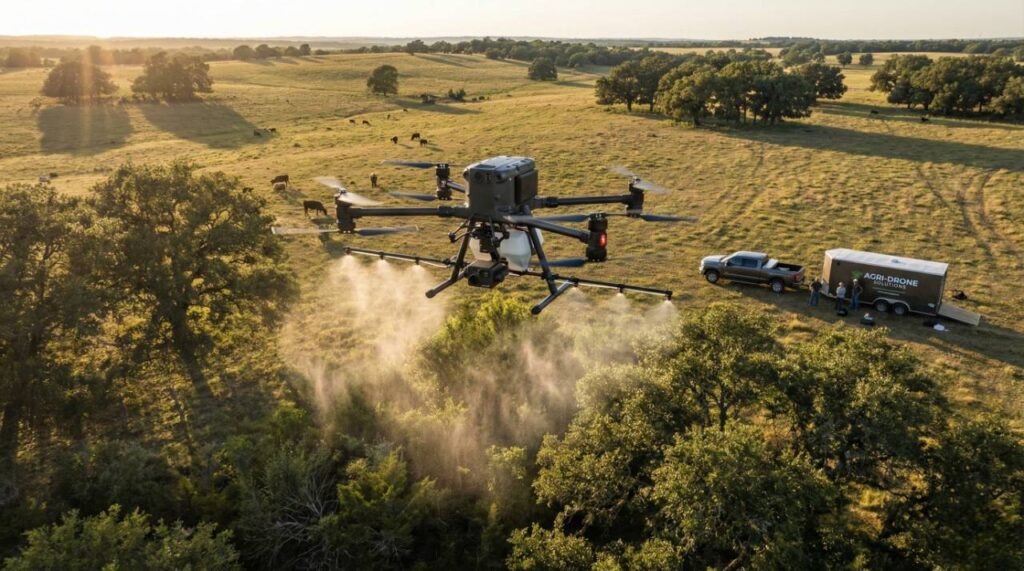
Drone-based wildlife habitat management uses unmanned aerial systems (UAS) to monitor, map, and manage land with extreme precision. These drones are equipped with GPS guidance, high-resolution cameras, and specialized spraying systems that allow targeted treatment without disturbing surrounding ecosystems.
Unlike traditional approaches, drones operate above the land, avoiding physical disruption while delivering accurate, data-driven results.
How Drones Protect the Ecosystem While Managing Land
One of the biggest advantages of drone technology is its ability to manage land without damaging the environment.
Precision Application Instead of Blanket Treatment
Drones apply treatments only where needed, eliminating unnecessary chemical use. This protects beneficial plants, insects, and wildlife species that are often harmed by traditional spraying.
Reduced Soil and Habitat Disturbance
Because drones don’t touch the ground, there’s no soil compaction, rutting, or damage to sensitive wildlife areas such as:
- Nesting zones
- Riparian corridors
- Wetlands
- Food plots
Controlled Chemical Drift
GPS-guided drone systems significantly reduce spray drift, preventing chemicals from reaching unintended areas like waterways or non-target vegetation.
Key Benefits of Using Drones for Wildlife Habitat Management
1. Environmentally Responsible Land Care
Drone-based management aligns with conservation goals by supporting habitat health instead of disrupting it.
2. Access to Difficult Terrain
Drones easily manage steep slopes, dense vegetation, wetlands, and remote properties that are unsafe or inaccessible for ground equipment.
3. Improved Wildlife Safety
Minimal noise, brief flight durations, and targeted application reduce stress and disturbance to wildlife populations.
4. Cost-Effective and Efficient
Large areas can be managed quickly, reducing labor costs while increasing accuracy and effectiveness.
Drone Applications That Support Wildlife Conservation
Drone technology is highly adaptable and supports a wide range of wildlife-focused land management tasks.
Invasive Species Control
Drones target invasive plants without harming native vegetation, preserving the balance of local ecosystems.
(Internal Link: Aerial Vegetation Management Services)
Habitat Restoration
By managing overgrowth and promoting native plant regeneration, drones help restore natural wildlife habitats.
Food Plot and Cover Management
Strategic vegetation control supports food sources and shelter essential for wildlife populations.
Aerial Mapping and Monitoring
High-resolution aerial data allows land managers to assess habitat conditions, track changes, and plan long-term conservation strategies.
(Internal Link: Aerial Mapping & Land Assessment)
Why Precision Matters in Wildlife-Focused Land Management
Wildlife habitats depend on balance. Over-treatment, under-treatment, or poor timing can harm ecosystems rather than help them.
Drone technology enables:
- Accurate vegetation density analysis
- Real-time land condition monitoring
- Data-backed decision making
- Long-term habitat planning
This precision ensures that wildlife management efforts enhance ecosystems instead of disrupting them.
Common Concerns: Are Drones Safe for Wildlife?
A common question landowners ask is whether drones themselves disturb wildlife.
The Reality
When operated correctly:
- Drones cause minimal disruption
- Flights are short and controlled
- Noise levels are significantly lower than heavy machinery
In fact, many wildlife species are less disturbed by drones than by traditional equipment or ground crews.
When Wildlife Habitat Management Is Needed
You may benefit from drone-based habitat management if your land shows signs such as:
- Invasive plant dominance
- Reduced native vegetation
- Poor wildlife activity
- Overgrown brush limiting habitat diversity
- Soil erosion or waterway blockage
Early intervention helps restore balance before long-term damage occurs.
Why Drone-Based Habitat Management Is the Future
As landowners and conservation professionals prioritize sustainability, drones offer a solution that aligns with both environmental and operational goals.
Drone-based wildlife habitat management represents:
- Smarter land stewardship
- Reduced environmental impact
- Better long-term outcomes for wildlife
- Lower operational risk
It’s not just a technological upgrade—it’s a shift toward responsible land management.
Final Thoughts: Smarter Land Management for Healthier Ecosystems
Drones are revolutionizing wildlife habitat management by offering precision, efficiency, and environmental protection all at once. By minimizing disturbance, reducing chemical use, and supporting data-driven decisions, drone technology allows landowners to protect wildlife while maintaining healthy, productive land.
If you’re looking for a modern approach to habitat management that respects the ecosystem, drone-based solutions provide a clear path forward.
👉 Explore our Wildlife Habitat Management Services
👉 Schedule a Consultation to Discuss Your Land Goals